



Homeowners in Canada have a valuable financial resource that not many realize is available to them, and that would be their property and home equity. Home equity can be accessed in different forms, such as loans and lines of credit.
Key Takeaways:
- There are two common ways to access your home equity: a home equity loan (lump sum) and a HELOC (revolving line of credit).
- You can typically borrow up to 80% of your home’s appraised value, minus your outstanding mortgage.
- Home equity loans suit large, one-time expenses with fixed repayment; HELOCs suit ongoing or flexible spending needs.
- Alpine Credits approves based on your home equity value, regardless of your credit score, income, or age.
A brief introduction to home equity
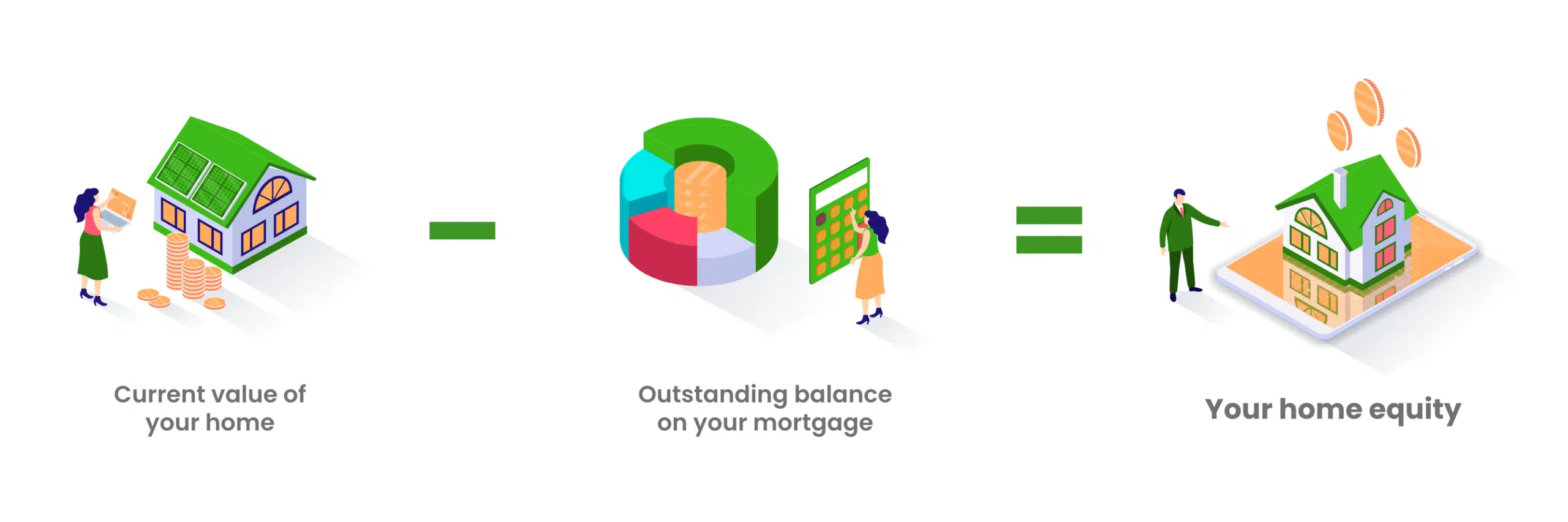
Home equity represents the value of your financial interest in your home. You can calculate it by subtracting your outstanding mortgage balance from your home’s current appraised value.
Building equity is an ongoing process of homeownership. The more of your mortgage you’ve paid down — and the more your property has appreciated — the larger your equity.
What is a home equity loan in Canada?
Home equity loans are installment loans; a lender provides you with a lump sum, and you agree to repay it with interest. The frequency of your payments can be determined during prior discussions with your lender.
As a loan from your home equity, the maximum loan amount is set by your home value. In Canada, you are permitted a home equity loan of up to 80% of your home value, depending on the lender, but you don’t have to withdraw the entire amount. Some lenders may operate under that range. For example, Alpine Credits offers up to 75%.
What is a Home Equity Line of Credit (HELOC) in Canada?
As its name suggests, HELOCs are lines of credit where your home equity sets the borrowing limit. They are also revolving loans, so they give you the opportunity to borrow money and repay for a set amount of time. HELOCs also usually come with variable interest rates so interest payments may fluctuate.
Once you have established your HELOC with your lender, you can start using it towards your plans and purchases. Since the line of credit is flexible, you can borrow as much as your limit allows.
One distinguishing feature of HELOCs is that the minimum monthly payment is the interest on the amount you borrowed, but you can also make contributions to the principal. If you start paying some of the principal right away, lenders may not charge any prepayment penalties.
Comparing HELOCs and home equity loans
After understanding the details of home equity loans and HELOCs, the next step is to decide what would work best for your situation. Both provide several advantages and will have different effects on individual homeowners.
 Pros and cons of a HELOC and home equity loan
Home equity financing can be the financial tool that helps you achieve your goals, but it also requires borrowers to consider some factors before committing.
Pros
- Flexibility — home equity funding can be used for any purpose, unlike standard personal loans or credit cards. If you have two objectives, you won’t have to apply for two separate loans to accomplish them.
- Potentially significant amount — with high property appraisal values, homeowners could get loans worth hundreds of thousands of dollars. Other loans and credit cards are less likely to have the same offer because they may require a good financial standing or high income.
- Lower interest rates — the interest rates are reasonably low for the amount that home equity funding offers. Compared to credit cards and unsecured personal loans, home equity financing helps you save on interest, allowing you to build healthier financial habits.
Cons
- Additional closing costs — appraisal fees or broker fees may be included in your loan’s closing costs. Be sure to take them into account as you’re finalizing your decision to get home equity financing.
- Require homeownership — newer homeowners and renters will not be able to access home equity funding because they will not have access to significant equity or any equity at all.
- Another mortgage — if you’re still paying your primary mortgage, paying for a HELOC or a home equity loan is another financial obligation that requires diligence. While they are good funding sources, you’ll have to ensure you can repay both mortgages.
Like any loan or line of credit, those based on your home equity need just as much consideration. It’s good to practice caution with loans secured by assets, but the chances of the worst occurring are low. With good habits and the right lender, home equity and HELOCs can be a good choice for some of your financial goals.
How to choose a home equity financing option
Choose a home equity loan if
- You prefer a fixed monthly payment — as a fixed-rate loan, you can be assured that you’ll have predictable monthly payments, allowing you to budget accordingly.
- Need a large, one-time deposit — home equity loans are frequently used for one or two major goals at a time, such as consolidating credit card debt and outstanding loans.
- You manage your finances well — acquiring a substantial amount of money can lead to overspending if not managed appropriately.
Choose a credit line from your home equity if
- You’re not sure how much you need — sometimes you can experience unforeseen changes in budget, so HELOCs allow for that flexibility.
- Need consistent funding for a period of time — small-scale home renovations are the most common example. They allow homeowners to withdraw when they need to.
- Prefer to only pay interest for some time — with fluctuating payments because of the variable rate, HELOCs allow homeowners to focus on the interest payments for some time until they’re able to repay the principal again.
How you can use home equity financing
Accessing a home equity loan gives borrowers a lot of spending flexibility. Some common reasons for homeowners to use home equity loans include the following.
- Loan consolidation — you can use a home equity loan to repay any outstanding balances from credit cards and other loans. Home equity loans are big and can potentially leave you with just one manageable payment towards the home equity loan. The interest rate would also be lower than it would be if you were paying all your obligations separately.
- Business capital — many entrepreneurs use a home equity loan towards their business, like buying equipment. Getting a home equity loan can be faster than getting one at the bank because you do not need to provide a business proposal like standard business loans.
- Home renovations — homeowners improve their property to make it more comfortable or increase its value. With a home equity loan, homeowners are free to make significant changes in a shorter amount of time, and they would spend less on interest compared to expensing all the costs to their credit card.
How much can you borrow?
Your borrowing limit depends on your home’s appraised market value and your existing mortgage balance. Lenders determine your maximum loan amount using the Loan-to-Value (LTV) ratio.
While traditional financial institutions may lend up to 80% LTV, Alpine Credits caps borrowing at a 75% LTV limit, meaning you must maintain a minimum of 25% equity in your property.
Calculating your available equity
Step 1: Calculate Total Home Equity
Appraised Home Value: $250,000
Less Outstanding Mortgage Balance: $150,000
Total Equity: $100,000
Step 2: Apply the 75% LTV Cap
Maximum Allowable Total Debt (75% LTV): $$250,000 * 0.75 = $187,500
Less Existing Mortgage Balance: $150,000 = $37,500
Maximum Borrowable Amount: $37,500
Requirements for HELOCs and home equity loans
One of the features of home equity financing is its simple eligibility criteria. Rather than using your financial details to determine your approval for a loan offer, home equity financing mainly uses your home’s equity value.
- Homeownership and sufficient equity — lenders vary, and the minimum amount of required equity can change between them. They could each ask for a minimum of 20-30% equity.
- Canadian residency or citizenship — permanent residency and citizenship holders can only receive home equity financing.
- Minimum 18 years old — the legal age in most of Canada is 18 years old, which also determines the age at which people are allowed to borrow.
Specific documentation requirements differ per case, but standard required paperwork typically includes:
- Current Mortgage Statement: To verify your outstanding loan balance and payment standing.
- Proof of Home Insurance: To confirm that the property is adequately insured.
- Government-Issued Photo ID: To verify ownership identity.
HELOCs and home equity loans may have different requirements if you get them from traditional financial institutions. On top of having enough equity in your home, you’ll also need a strong credit score, a steady income, and a low debt-to-income ratio.
At the bank, not meeting the minimum requirement decreases your chances of getting approved. Some homeowners get approved nonetheless but may not be offered their ideal rate or loan amount. Because of the banks’ criteria, many homeowners turn to alternate lenders because their requirements are more reasonable.
What’s the difference between HELOC rates and home equity loan rates?
HELOCs usually have variable interest rates, while home equity loans usually have fixed interest rates, and they may vary depending on the lender and your financial standing. Some lenders will offer set rates regardless of your score or equity, but some will use some of your details to finalize a rate offer.
Are home equity loans better than HELOCs?
In a way, home equity loans can be better than HELOCs. Monthly payments are unpredictable with a HELOC, especially since the mortgage rate in Canada has been rising over the past few years. Repaying the principal and the interest can be more challenging during times of high interest rates, which can end up being more costly in the end compared to home equity loans.
Home equity loans also tend to have a higher borrowing limit than HELOCs. You can access up to 75% of your home’s equity value with a home equity loan from Alpine Credits, but HELOCs are limited to 65%. As a result, home equity loans can provide more financial support.
Home equity is a valuable tool, use it with Alpine Credits
In Canada, property value has steadily increased, giving homeowners an advantage through the equity they’ve built over the years. Accessing home equity as a loan or a line of credit is a common strategy for homeowners to improve their financial situation by consolidating outstanding balances or renovating their house to be more comfortable.
Alpine Credits specializes in home equity loans, and applying for one is straightforward. Unlike traditional lenders, we do not require your income or credit score. Since 1969, we have proudly helped thousands of Canadians secure the funding they need in just three, straightforward steps:
- Apply online — the application with Alpine Credits is simple, allowing you to finish it within minutes.
- Get approved — if you own your home and have at least 25% in equity, you are eligible for a home equity loan from Alpine Credits. Get approved in minutes.
- Receive funding — Alpine Credits will directly deposit the money in your bank account within a few days of your approval.
Contact one of our Financial Solutions Specialists for a free, no-obligation quote today.