


Choosing the right mortgage rate is a crucial step for any homebuyer or homeowner in Canada. With fluctuating rates and various factors influencing them, understanding how mortgage rates work can save you thousands of dollars over the life of your loan.
What is a mortgage rate in Canada?
A mortgage rate is the interest charged on a mortgage loan, expressed as a percentage of the loan amount. In Canada, mortgage rates can vary significantly based on several factors, including the lender, the type of mortgage, and the borrower’s financial profile.
How does mortgage rate work in Canada?
There are many types of mortgages in Canada. A fixed-rate mortgage means the interest rate remains constant throughout the loan term, providing stability in monthly payments. Conversely, a variable-rate mortgage fluctuates with market conditions, potentially offering lower initial rates but with the risk of increased payments if rates rise.
Several key factors influence mortgage rates in Canada:
- Prime rate: The prime rate is the base rate set by financial institutions to determine how much they can charge on their mortgages and loans. The Bank of Canada’s policy rate, or overnight lending rate, guides a bank’s prime rate. A lower policy rate means lower interest rates on a bank’s lending products.
- Credit score: A higher credit score typically leads to lower mortgage rates. Lenders view borrowers with solid credit histories as less risky, which can translate into more favourable terms.
- LTV and DTI ratios: The Loan-to-Value (LTV) ratio is the amount of the mortgage compared to the appraised value of the property. A lower LTV ratio generally results in better rates. In contrast, the Debt-to-Income (DTI) ratio measures your total monthly debt payments against your gross monthly income. A lower DTI indicates a healthier financial position and can lead to better mortgage rates.
- Amortization period: A mortgage’s amortization period is the duration over which you’ll make payments—generally, a longer amortization period results in higher interest rates.
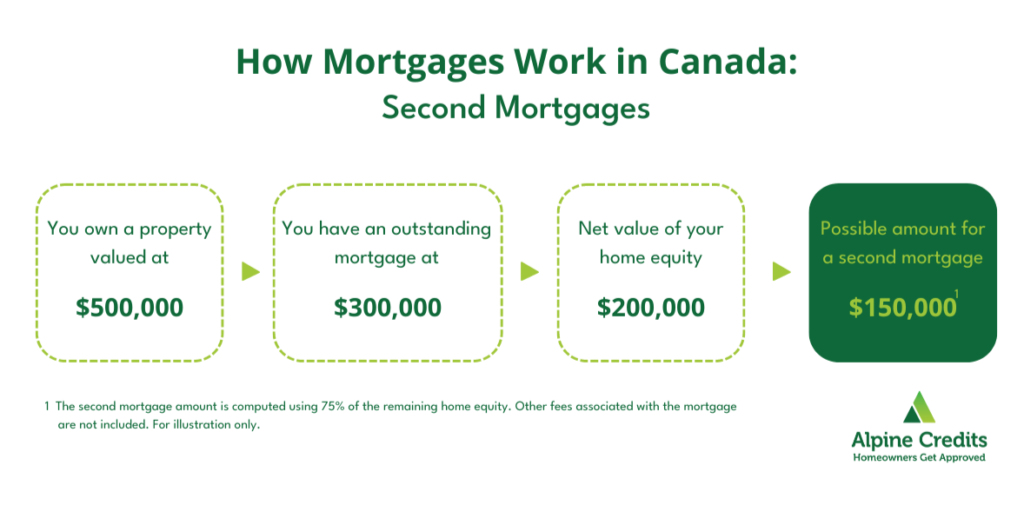
- Mortgage position: The mortgage position—whether first, second, or third—can impact your rate. A first mortgage is the primary loan used to buy a property, making it the first lien on that asset, while a second mortgage follows the first, acting as a second lien on the same property. Second mortgages usually carry higher interest rates because they have a lower claim on the property. When you sell, the first mortgage gets paid off first, and any remaining funds go to the second mortgage.
Mortgage options in Canada
Across Canada, there are a wide range of mortgage options designed to meet the diverse needs of homebuyers and homeowners. From the initial purchase of a home to managing existing mortgages, the choices can seem overwhelming.
Whether you’re looking for a first mortgage, considering a second mortgage, exploring renewal terms, or refinancing your current loan, understanding each option is key, as they can all impact your interest rates and long-term costs in different ways.
First mortgages
As mentioned, a first mortgage refers to the initial loan you secure to purchase a home. Since they are the primary lien on the property, first mortgages generally have the lowest mortgage rates among other mortgages.
Mortgage renewal
Mortgage renewal is the process of extending the term of an existing mortgage loan once the initial term expires. Each time you renew your mortgage, you also renegotiate your interest rate. This means your mortgage payments might increase or decrease in the future.
Mortgage refinance
A remortgage loan, or mortgage refinancing, replaces your existing mortgage with a new one. It can involve the same or a more significant loan amount, enabling homeowners to benefit from better interest rates, modify the loan term, or access extra funds.
Second mortgages
Similar to a first mortgage, a second-position mortgage allows you to tap into your home’s equity. A second mortgage in Canada can be utilized for various purposes beyond just purchasing a property. You can use it for home renovations, funding your child’s education, or supporting a business venture.
If you’ve been paying your mortgage for a few years, you’ve likely built equity in your home, which you can leverage through a home equity loan. The more value you’ve paid off, the larger the loan you can obtain.
While banks and other financial institutions may promote lower rates, the actual quote may be much higher if your credit rating is poor, or your income is insufficient.
Notably, Alpine Credits offers competitive rates and focuses on home equity rather than credit score, income, or age, making it an attractive option for homeowners looking to leverage their equity.
Impact of interest rate on mortgage payments
The interest rate on your mortgage significantly impacts your mortgage payments. A higher interest rate can result in higher monthly payments, while a lower interest rate can have lower monthly payments (depending on the amortization period).
When interest rates rise, it can also impact your ability to qualify for a mortgage, as lenders assess your ability to make higher monthly payments. Therefore, shopping around and comparing different mortgage rates is crucial to finding the best deal that fits your financial situation.
Tips to find the best mortgage rate in Canada
- Improve credit score
Improving your credit score is one of the most effective ways to secure a better mortgage rate. A higher credit score can lead to a lower mortgage interest rate, as lenders consider it a sign of lower risk. Before applying for a mortgage, pay down existing debts, make payments on time, and avoid taking on new debts.
- Know your loan-to-value (LTV) ratio
The loan-to-value (LTV) ratio measures mortgage risk by dividing the loan amount by the property’s value. A lower LTV indicates a larger personal investment, leading to better rates. You can improve your LTV by saving for a larger down payment or making extra mortgage payments.
- Save for a down payment
A larger down payment not only reduces the amount you need to borrow but also lowers your LTV ratio, which can lead to more favorable mortgage rates. Additionally, a larger down payment can lead to a lower mortgage interest rate, as lenders often offer better rates to borrowers with a strong financial standing. Aim for at least 20% to avoid paying for mortgage insurance.
- Know your debt-to-income (DTI) ratio
Understanding your DTI ratio is crucial. A lower debt-to-income ratio can lead to a lower mortgage interest rate. Lenders prefer a DTI of 36% or lower. If your ratio exceeds this, consider paying down debts or increasing your income to improve your chances of securing a better rate.
- Use a mortgage calculator
A mortgage calculator can help you estimate your monthly payments based on different rates and loan amounts. This tool can provide clarity and assist in budgeting for your mortgage.
Own your home? Alpine Credits is here for your borrowing needs
Whether you’re a first-time homebuyer or looking to access equity in your current home, being proactive about your mortgage options will ultimately lead to better financial outcomes.
If you already own a home and are considering a home equity loan, Alpine Credits can help you access the equity in your home. With competitive rates and flexible terms, we provide solutions tailored to your financial situation.
You can apply for a home equity loan in just three easy steps:
- Apply online—The application with Alpine Credits is simple and can be completed in minutes.
- Get approved—If you own at least 25% of your home, you are eligible for a home equity loan from Alpine Credits.
- Receive funding—Alpine Credits will deposit the money directly into your bank account within a few days of your approval.
Contact one of our Financial Solutions Specialists for a free, no-obligation quote today.
Frequently asked questions:
How to find the best mortgage rates in Canada?
To find the best mortgage rates in Canada, compare offers from multiple lenders, including banks, credit unions, and mortgage brokers, while considering factors like the term length, whether the rate is fixed or variable, and your down payment size and credit score.
Will mortgage rates go down in 2024 in Canada?
While predictions vary, many experts suggest that mortgage rates may stabilize or even decrease slightly in 2024 due to shifts in economic conditions and inflation rates. However, it’s essential to stay informed and consult with financial advisors for the most accurate forecasts.
How is interest calculated on a mortgage?
Interest on a mortgage is typically calculated using an amortization schedule, which outlines the breakdown of each payment into principal and interest over the loan term.