



With a thriving real estate market, many homeowners might find themselves asking, “how many mortgages can you have in Canada?” This article simplifies the complexities surrounding mortgages, including strategies for managing multiple mortgages and financing options to consider when looking for an additional mortgage on your property.
How Many Mortgages Can You Have in Canada?
There are no limits to the number of mortgages you can have in Canada. Instead, people are limited by their financial situation or ability to manage multiple mortgages. Generally, it’s common to have two simultaneous mortgages on a single property– known as first and second mortgages. 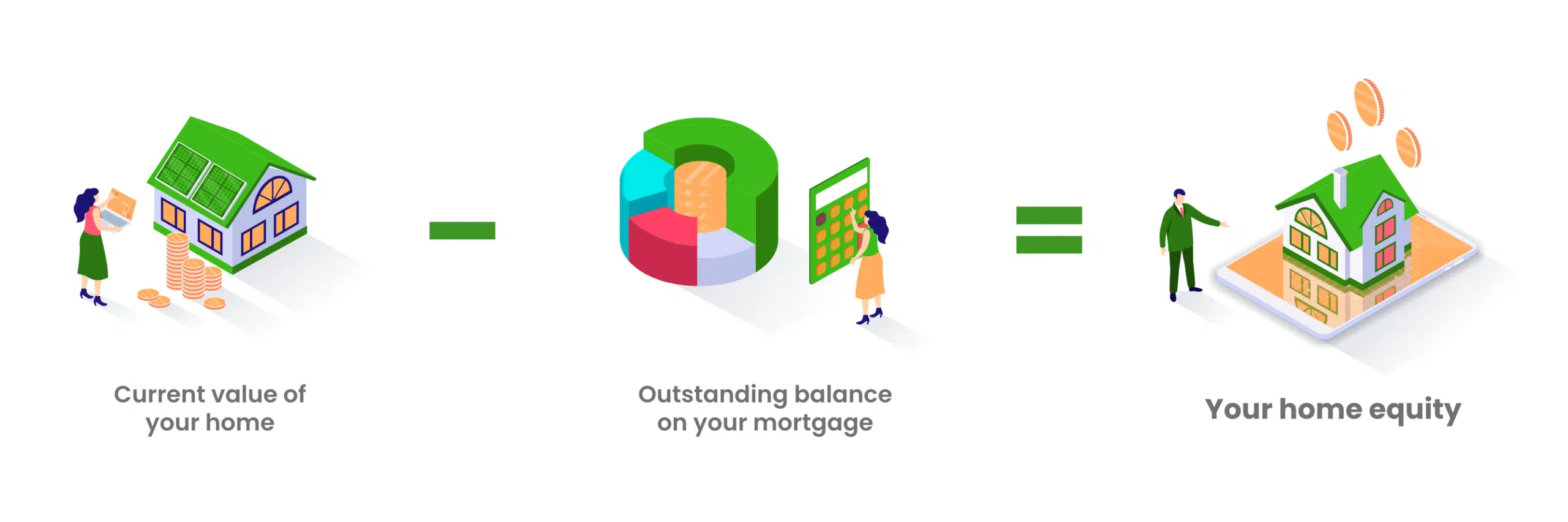
Conventional Mortgages vs Second Mortgages
A conventional mortgage (or first mortgage) is the principal loan used to purchase a property. In this case, it is the first lien registered against the collateral. Meanwhile, a second mortgage is the subsequent loan after the first mortgage. It will be the second lien against the same collateral.
Since first mortgages have the first lien (or claim) against the collateral, first mortgage lenders also have priority in the event of foreclosure. This means subsequent lenders must wait for the first mortgage lender to satisfy their claim.
For example, once you sell the property, the first mortgage is paid off first, and the second mortgage is paid with the leftover amount.
Managing Multiple Mortgages On A Property
While there’s no legal limit on the number of mortgages you can have in Canada, managing multiple mortgages can be complex. Here are some strategies to help you prepare and manage additional mortgages:
1. Assess your financial health:
Whether you’re considering purchasing a second home, investing in rental properties, or exploring other real estate opportunities, evaluate your income, expenses, and overall financial stability before taking on additional mortgage debt.
2. Choose the right lender:
Different lenders have varying policies regarding multiple mortgages. Shop around to find a lender willing to work with you on your situation. Alternative lenders, like Alpine Credits, may offer more flexible requirements than traditional banks.
3. Understand mortgage types:
Familiarize yourself with different types of mortgages available, such as fixed-rate, variable-rate, and alternative mortgages. Each type has pros and cons; understanding these can help you make informed decisions about which mortgages to pursue.
4. Stay within your budget:
Having multiple mortgages means multiple payment schedules. Create a detailed budget that accounts for all mortgage payments, interest rates, and any potential fluctuations in your financial situation. This proactive approach can help you avoid late fees and penalties.
Why Would You Need An Additional Mortgage?
They can be used for different purposes. Common reasons include:
- Debt consolidation: It can be used to pay off multiple high-interest debts (credit cards and student loans) with multiple monthly payments. Once paid off, the debts are consolidated into a single monthly payment with a potentially lower interest rate.
- Home renovation/remodeling: With a second or third mortgage, you can use your property’s equity and access additional funding to invest back into it through home renovations or remodeling.
- Secured personal loans: It can be a suitable option for unexpected expenses like medical bills and household repairs. Because your home secures it, you may enjoy better terms than with unsecured loans, making it an attractive financing option.
Types of Second-position Mortgages
Second Mortgage Loans
Like a first mortgage, a second-position mortgage will leverage your home’s value. However, unlike first mortgages, a second mortgage in Canada goes beyond the purchase of a property. You can use it for home improvements, your child’s education, or funding a business.
Cash-out Refinance
With a cash-out refinance, you can convert your home equity into additional cash while paying the remaining balance of your mortgage. It works by taking out a larger mortgage loan, using the proceeds to pay off the existing mortgage and receiving the remaining funds as a lump sum.
Home Equity Lines of Credit (HELOCs)
A home equity line of credit (HELOC) is a mortgage that acts as a revolving loan. This means you can draw on it over several years, with the amount and frequency varying based on your usage. You’ll be charged interest only on the withdrawn amount, which you can repay to free up your available credit again.
HELOCs typically have higher interest rates than conventional mortgages. And the rates are variable, meaning they can fluctuate over time.
Home Equity Loans
Another way to access the equity you’ve built is through a home equity loan. Compared to the previous options, you may be able to access more funding.
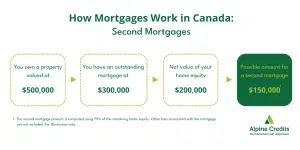
Some home equity loans allow borrowers to access up to 75% of their home equity as a lump sum, which you can use for various purposes. With alternative lenders like Alpine Credits, the eligibility requirements for a home equity loan are simpler, focusing on home ownership and equity rather than credit, age, or income.
Financing Options For Additional Mortgages
When considering additional mortgages, explore various financing options:
- Traditional Banks: With traditional lenders, getting approved for additional mortgage loans may require passing the mortgage stress test, providing a down payment (for purchasing additional property), and paying extra fees. Being involved in a real estate business can also impact the approval process, as lenders consider the nature and performance of your properties.
Meeting these requirements assures them that you can manage multiple mortgage payments.
- Credit Unions: May offer more flexible terms and lower rates, especially for members. However, credit unions tend to have fewer branches than traditional banks, which may be a problem for customers looking to access their funds in person.
- Private Lenders: Can be an option for those who may not qualify with traditional lenders or who simply want faster processing and simpler application requirements.
Get Your First, Second or Third Mortgages with Alpine Credits
With Alpine Credits, you can borrow up to 75% of your home equity. The more equity you’ve built, the more you can borrow and invest towards your financial goals. Applying for a home equity loan is simple and only has three steps.
- Apply online — you can quickly finish applying for a home equity loan from Alpine Credits. You don’t need to provide your credit score or your income history. All you need is your home equity value.
- Get approved — if you’re a homeowner and have built up a significant equity in your property, you’re eligible to be approved for a home equity loan. You’ll also hear back about your application in a matter of days, faster than traditional lenders.
- Use the funds for any purpose — you can freely use the funds for consolidating debt, funding a business, or paying a portion of an investment property. It’s entirely up to you.
If you have more questions, contact a Financial Solutions Specialist at Alpine Credits for a free, no-obligation quote. They can guide you through the application and provide answers along the way.
Frequently asked questions
What is a blanket mortgage in Canada?
A blanket mortgage allows you to buy multiple properties at once. It is more common among real estate developers and investors. Instead of applying for multiple mortgages, they can simplify the process by applying for a blanket mortgage.
What are the rules for mortgages in Canada?
Getting a mortgage in Canada involves several rules, which includes passing the mortgage stress test, paying a downpayment, and mortgage insurance.
Can there be two mortgages on one property?
You can have two or more mortgages on one property, which include the first mortgage and the second and third mortgages (typically a home equity line of credit or home equity loan). Getting approved will depend on which financial institution you choose and the criteria they set.