



The average Canadian credit card debt has become a growing concern for many Canadians as they face the rising cost of living. Here’s what you need to know about the current credit card debt levels in Canada, types of debts, and debt levels per age group and province. Plus, four ways to manage your finances more effectively.
How much debt does the average Canadian carry?
According to TransUnion, the average credit card debt per borrower in Q2 of 2024 was $6,329. As more consumers turn to credit cards to help manage their daily spending, so do credit card balances increase. They are up 8.6% year-over-year.
On the other hand, Equifax Canada recently reported that younger consumers, especially those under 35, face the fastest decline in card payment levels, further increasing credit card balances.
Before we discuss the statistics further, however, let’s explore how credit card debt accumulates and the types of debt you should watch out for.
What is credit card debt?
Credit card debt is money a consumer owes for purchases made by credit card. It is a liability that can accumulate when consumers spend more than they can afford to pay off each month. Unlike mortgages or student loans, credit card debt typically comes with high interest rates, leading to significant financial strain if not managed properly.
Credit card debt is a type of consumer debt and one of Canada’s most common types of debt. Read on below to learn more about the kinds of debt.

Consumer debt vs Non-consumer debt
Consumer debt encompasses personal debts like loans, credit card purchases, and unsecured lines of credit. These debts are typically incurred for personal and household purchases such as groceries, clothing, and entertainment.
While consumer debt can provide immediate access to goods and services, it often comes with high interest rates, making it crucial for individuals to manage their borrowing wisely.
On the other hand, non-consumer debt refers to obligations that are not primarily for personal consumption. This category includes business loans, mortgages for investment properties, and other debts incurred for the purpose of generating income or managing business operations.
What is a manageable credit card debt?
“Manageable credit card debt” can mean different things to many people.
Still, experts say that credit card use must be kept between 10% to 15% of income while utilizing 30% or less of your approved credit limit to avoid negatively impacting your credit score.
Canadian credit card usage and demographics
Understanding “manageable credit card debt” requires examining several factors that affect consumer spending, such as geography and life stages.
Here are some statistics about the usage of credit cards in Canada:
Top reasons for credit card use in Canada
The total number of credit cards in Canada is around 545 million in Q2 of 2024.
According to a recent survey, the top reasons why Canadians use credit cards include higher prices for goods/services (64%) and major unexpected purchases (30%). The burden of rising mortgage payments is also a significant concern, as it contributes to the growing household debt and impacts financial health and the ability to pay for credit card debt.
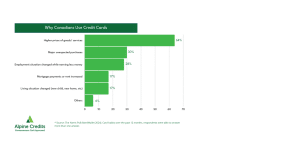
Usage of credit cards by Canadians. Adapted from NerdWallet survey. Illustration from Alpine Credits.
Average consumer debt by age groups
Equifax Canada found that the rising cost of living, even with rate cuts, appears to exert pressure on younger Canadians. This has led to an increase in the number of families opting for multigenerational living arrangements, as younger Canadians continue to face high financial strain to save for their own homes.
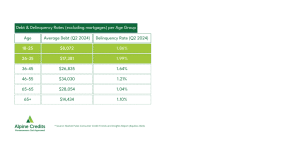
Consumer debt by age groups. Adapted from Equifax Canada. Illustration from Alpine Credits.
These figures highlight how debt levels tend to increase with age, reflecting Canadians’ various financial responsibilities and life stages. Understanding these median debt levels can help individuals benchmark their financial health and make informed decisions about managing their debt.
Average consumer debt by province
Based on the same Equifax report, Alberta had the highest delinquency rate in the country at 1.73%.
In a report, Equifax vice president Rebecca Oaks said that the industry in Alberta tends to be a little more volatile than the rest of the country and is more linked to what’s happening with oil and gas prices. She added that this phenomenon affected Albertan’s credit usage.
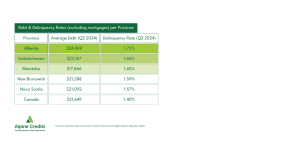
Consumer debt by provinces. Adapted from Equifax Canada. Illustration from Alpine Credits.
How to manage credit card debt in Canada
When a balance is carried over from one month to the next, interest accrues on the outstanding amount, increasing the total debt. This can create a difficult-to-escape cycle of debt, as consumers may make minimum payments that barely cover the interest, leaving the principal amount largely unchanged.
To effectively manage credit card debt, you should consider the following strategies:
1. Create a budget: Track income and expenses to identify areas where spending can be reduced.
By reallocating these funds towards debt repayment, you can create a more sustainable financial plan. Additionally, budgeting tools or apps can simplify this process, allowing you to monitor your progress and adjust as necessary.
2. Pay more than the minimum: Aim to pay more than the minimum payment to reduce the principal faster and minimize interest costs.
By committing to paying more than the minimum, you reduce the principal balance faster, decreasing the amount of interest charged over time. Even small additional payments can make a significant difference in the long run, helping you become debt-free more quickly and saving you money on interest costs.
3. Try a debt repayment strategy: Implementing a structured debt repayment strategy can streamline your efforts to pay off credit card debt.
One popular method is the avalanche strategy, which involves first paying off the card with the highest interest rate. Alternatively, the snowball method encourages you to pay off your smallest debts first, providing psychological wins that motivate you to tackle larger debts.
4. Consider balance transfers and debt consolidation: For many consumers, transferring high-interest credit card balances to a card with a lower interest rate can be a smart way to manage debt. Many credit cards offer promotional rates for balance transfers, which can significantly reduce the interest you pay on existing debt.
Additionally, consider debt consolidation loans, which combine multiple debts into a single loan with a lower interest rate. This can simplify payments and potentially lower monthly expenses, making it easier to manage your overall financial situation.
By understanding the implications of credit card debt and implementing effective management strategies, individuals can work towards financial stability and reduce the debt burden over time.
Consolidate multiple credit card debt with Alpine Credits
Consolidating multiple credit card debts can be a strategic move to manage your finances better. By combining several debts into one, you can often secure a lower interest rate, reduce your monthly payments, and simplify your financial obligations.
With Alpine Credits, you can borrow up to 75% of your home equity, which you can use to consolidate multiple high-interest credit card debts into one. This also means the more equity you’ve built, the more you can borrow and use for any financial goals.
Applying for a home equity loan to consolidate your debts is simple and easy:
- Apply online — you can quickly finish applying for a home equity loan from Alpine Credits. You don’t need to provide your credit score or your income history. All you need is your home equity value.
- Get approved — if you’re a homeowner and have built up equity in your property, you’re eligible to be approved for a home equity loan.
- Use the funds for any purpose — you can freely use the funds for consolidating debt, renovating, or paying a portion of an investment property. It’s entirely up to you.
If you have more questions, contact a Financial Solutions Specialist at Alpine Credits for a free, no-obligation quote today.
Conclusion: using second mortgages to pay off debts
An additional mortgage, if used correctly, can be a powerful financial tool that can help you unlock your home’s economic potential and allow you to manage your financial obligations quickly. It gives you the financial freedom to be on top of your outstanding balances. A second mortgage with the right lender like Alpine Credits can be a game changer for your financial situation.
Frequently asked questions
How much credit card debt does the average person have?
According to a TransUnion report, the average Canadian’s credit card debt in 2024 is $6,329.
What is a good amount of credit card debt?
According to experts, a good amount of monthly credit card debt is below 15% of your monthly income, with a utilization ratio across all your credit cards below 30%.
Is $5000 in credit card debt a lot?
$5,000 in credit card debt can be a lot, especially if left unpaid for several months. You may rack up interest charges even if you make only the minimum payments each month.