



The average credit score in Canada is 760 in 2026. This falls in the “very good” range. Still, many Canadians score below this level due to life events and financial challenges.
At Alpine Credits, we believe your financial potential is more than just a three-digit number. Whether you are looking to benchmark your progress or find a way forward, understanding the national average is the first step toward taking control of your financial future.
What is an average credit score in Canada?
According to FICO, the average Canadian credit score is 760, down slightly from previous years but still in the “excellent” range. On the other hand, a Borrowell study reports a national average closer to 672. These differences occur because FICO and Borrowell each use different data sources and scoring models to calculate averages.
A credit score is a three-digit number that represents your creditworthiness. Remember, credit score calculation uses data from your credit report, which is compiled by credit bureaus like Equifax and TransUnion.
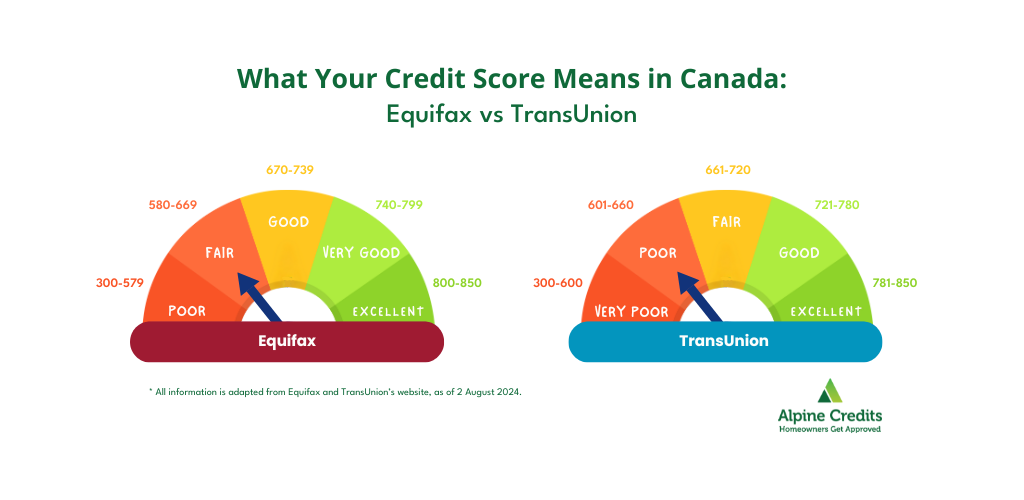
In Canada, the credit score ranges from 300 to 900, with 900 being the maximum credit score. The closer you are to the credit score’s highest range, the better your chances for lower interest rates and approvals.
| Credit Rating | Equifax Score Range | What it Means for You |
| Excellent | 760 – 900 | You’re a “gold star” borrower; access to the lowest rates. |
| Very Good | 725 – 759 | Strong credit; better rates and approvals. |
| Good | 660 – 724 | This is the “safe zone” for most standard bank loans. |
| Fair | 560 – 659 | You may face higher interest rates or smaller limits. |
| Poor | 300 – 559 | Traditional banks may decline applications here. |
Average Canadian credit score by age
Credit scores tend to rise with age as people build their credit history. Younger Canadians are often “credit-thin,” while seniors benefit from decades of history. To understand how credit scores evolve throughout life, we can refer to Equifax’s most recent generational data, which breaks down the average Canadian credit score by age group.
| Age Range | Average credit score | What it means |
| Ages 18–25 | ~692 | Limited credit history and student debt are primary factors why they possess low credit scores. |
| Ages 26–35 | ~697 | Scores stabilize as individuals manage first mortgages and car loans. |
| Ages 36–45 | ~710 | Improved scores result from established repayment routines. |
| Ages 46–55 | ~718 | Longer track records lead to “Good” to “Very Good” ratings. |
| Ages 56–65 | ~737 | Reduced debt levels contribute to higher scores. |
| Ages 65+ | ~750 | This group holds the highest average due to decades of history. |
Managing credit wisely at every stage of life—by making timely payments, maintaining low utilization, and practicing good debt management skills—can help improve or maintain your credit score as you age.
Average Canadian Credit Score by Province
Credit scores also differ by region because of varying economic conditions, housing, and consumer debt. While provincial averages aren’t always published, Borrowell’s 2022 city-level data helps illustrate regional credit health.
|
Province |
Approx. Average Credit Score* |
Top City Average |
|
British Columbia |
~694 |
705 (Vancouver) |
|
Ontario |
~686 |
720 (Markham) |
|
Quebec |
~678 |
690 (Montreal) |
|
Nova Scotia |
~664 |
664 (Halifax) |
|
Manitoba |
~661 |
Winnipeg (661) |
|
Saskatchewan |
~658 |
Regina (659) |
|
Alberta |
~658 |
667 (Calgary) |
| New Brunswick | ~649 |
649 (Moncton) |
* These estimates are mainly based on averaging city-level credit scores from major urban centres within each province (e.g., Vancouver, Toronto, Montreal) and using that to approximate a provincial figure. The major credit bureaus do not publish full provincial breakdowns publicly each quarter.
Why credit scores vary
Credit scores differ because each bureau uses its own formula. For example, your Transunion credit score may not match your Equifax score.
What can affect your credit score in Canada?
Credit scores are determined by several factors. Here are the five key contributors:
- Payment History
Your payment history is the most important factor in your credit score calculation. Late or missed payments can significantly lower your score. Even one missed payment can remain on your credit report for up to six years. - Credit Utilization Ratio
This is the percentage of available credit you’re using. A high debt-to-credit ratio indicates higher risk. Experts suggest keeping utilization below 30%. For example, if your credit limit is $10,000, you should aim to keep your balance below $3,000. - Credit History
The length of time you’ve had credit accounts matters. A long credit history demonstrates consistency and reliability. Closing old accounts can shorten your history and potentially lower your score. - Public Records
Bankruptcies, consumer proposals, and other public records can negatively affect your credit score for years. A bankruptcy, for example, may remain on your file for six to seven years depending on the province. - New Inquiries
Frequent credit checks or applications for new credit cards and loans can temporarily lower your score, as lenders may see this as financial instability. Limiting unnecessary inquiries can help keep your score steady.
How to improve your credit score in Canada
If you’re dealing with a poor credit score or want to aim for a higher credit score, here are some strategies to improve:
- Pay bills on time: Payment history is a key factor in most credit scoring models, so even one late or missed payment can negatively affect your credit score. Setting up pre-authorized payments or automatic payments can help ensure you never miss a payment, which is crucial for maintaining a good credit score.
- Reduce credit utilization: Pay down balances and keep usage low compared to your credit limit. Keeping your credit utilization low—ideally below 30%—shows that you can manage your debt without relying too heavily on your credit limit. This not only helps you maintain a good credit score but also signals to lenders that you’re a responsible borrower.
- Avoid unnecessary credit inquiries: Only apply for credit when needed. Responsible credit use not only improves your credit score but also increases your access to higher credit limits and more favorable interest rates.
- Build a long credit history: A higher credit score is also supported by maintaining a long credit history. Keeping older credit accounts open, even if you don’t use them often, can help lengthen your credit history.
- Diversify your credit mix: Having a mix of different types of credit—such as revolving credit (credit cards) and installment loans (personal loans, car loans)—can further boost your score, as it demonstrates your ability to manage various forms of credit.
- Consider debt consolidation: If you have several high credit card balances, taking out a debt consolidation loan could make managing debt easier and improve your credit score.
- Check your credit report regularly: Monitoring your report helps you spot errors or inaccuracies that could negatively affect your score, and allows you to address any issues promptly. Many online banking platforms now allow you to monitor your credit score directly, often using data from agencies like Equifax or TransUnion.
How Alpine Credits supports your journey
At Alpine Credits, we know that life happens. A job loss, an illness, or a market dip shouldn’t stop you from accessing the money you need. Alpine Credits bases lending decisions on the equity in your home, not your credit score.
If you own your home and have at least 25% equity, we can help you get back on track—regardless of what the credit bureaus say.
- Apply online – Complete your application online in minutes. There’s no need to worry about your credit score or income history—our process is fast, simple, and secure.
- Get approved quickly – If you have sufficient home equity, you could be approved within 24 hours.
- Access your funds fast – Once approved, your loan is funded directly to your account—often within just a few days. You can use your home equity to do anything, from consolidating debt to covering unexpected expenses or funding home improvements.
Contact a Financial Solutions Specialist at Alpine Credits to get a free, no-obligation quote today.
Frequently asked questions:
What is a decent credit score in Canada?
A credit score of 660 or higher is considered fair. Aiming for a higher number may help you access the best loan terms and rates.
What percentage of the population has a credit score over 800 in Canada?
According to the latest FICO report from 2024, approximately 41.1% of Canadian consumers fall into the highest credit score tier, which is 800 or above. Having a high credit score makes borrowing funds easier and more affordable by securing better loan terms.
Does income affect credit score?
No, income does not directly impact your credit score in Canada. Credit bureaus do not include income in their scoring models. However, income indirectly influences credit and financial health—those with higher earnings may find it easier to manage debt payments, maintain lower utilization, and build strong repayment histories.